Explainer
What is a serger and what can it do
Published
Short answer
A serger, called an overlocker in the UK and elsewhere, is a machine that trims the fabric edge, sews the seam and wraps thread around the raw edge in one pass. It uses two to five threads and loopers instead of a bobbin, which makes stretchy, professional seams on knits and clean finishes on wovens. It complements a sewing machine rather than replacing it.
Machines for this job
All 8 picks compared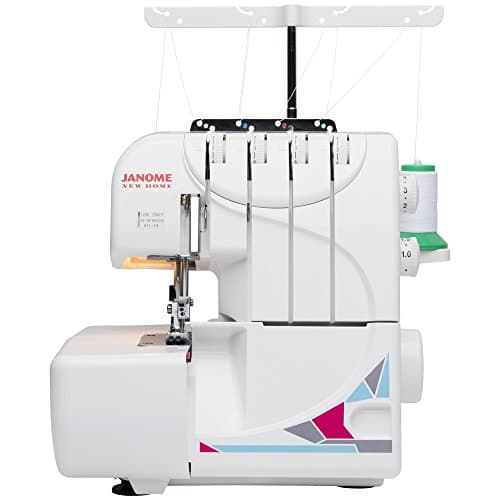
Janome MOD-8933, lay-in threading with differential feed
See price on AmazonSee it on Amazon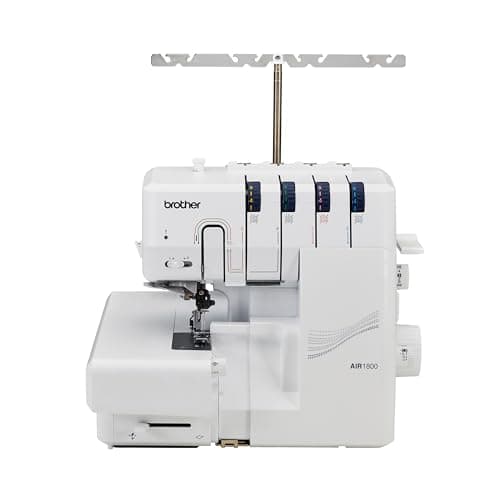
Brother AIR1800, jet air looper threading
See price on AmazonSee it on Amazon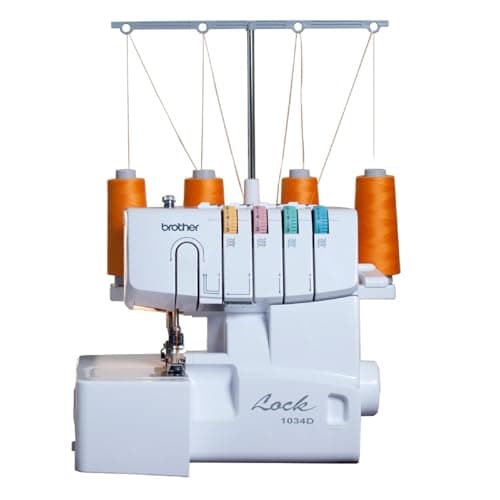
Brother 1034D, color-coded threading, metal frame
See price on AmazonSee it on Amazon
If you have seen the neat, looped edges inside store-bought clothes and wondered how to make them at home, the answer is a serger. This page is for home sewists deciding whether a serger is worth adding. It explains what a serger is, why serger and overlocker mean the same machine, how it forms its stitches, the stitch types a typical home serger offers, the projects that benefit most and the jobs it cannot do. It ends with a quick checklist for whether to buy one now.
Serger vs overlocker: the same machine
Serger is the common name in the United States. Overlocker is the term used in the UK, Australia and much of Europe. Both describe the same kind of machine: one that sews an overlock stitch around a fabric edge while a built-in knife trims the excess.
Machine makers use both names, sometimes in the same product title, so a listing for an overlock machine and a listing for a serger are describing the same category. What matters is the thread count and stitch options, not the name.
How a serger works
A sewing machine forms a lockstitch with one needle thread and one bobbin thread. A serger has no bobbin. Instead it uses one or two needles plus an upper looper and a lower looper. The loopers carry their threads around the fabric edge and interlock with the needle threads, forming a chain of loops that wraps the raw edge.
In front of the needles, a pair of blades trims the fabric just before it is stitched, so the seam is sewn, trimmed and finished in a single pass. Most home sergers also have differential feed, two sets of feed dogs that can move at different speeds to stop knits from stretching out or lightweight fabrics from puckering. The diagram shows how the needle and looper threads sit on a typical 4-thread seam.
What a serger can do
A typical 2/3/4 thread home serger, such as the Brother 1034D, Juki MO-654DE or Singer S14-78, offers a handful of stitches by changing which needles and loopers are threaded and adjusting a few settings.
Stretch seams on knits
- Serger
- Yes, best choice
- Sewing machine
- Yes, with stretch stitch or zigzag
Finish raw edges
- Serger
- Yes, trims and wraps
- Sewing machine
- Zigzag or overcast stitch
Topstitching
- Serger
- No
- Sewing machine
- Yes
Zippers and buttonholes
- Serger
- No
- Sewing machine
- Yes
Rolled hems
- Serger
- Yes
- Sewing machine
- Rolled hem foot, slower
Coverstitch hems
- Serger
- Only on combo models
- Sewing machine
- Twin needle approximation
| Task | Serger | Sewing machine |
|---|---|---|
| Stretch seams on knits | Yes, best choice | Yes, with stretch stitch or zigzag |
| Finish raw edges | Yes, trims and wraps | Zigzag or overcast stitch |
| Topstitching | No | Yes |
| Zippers and buttonholes | No | Yes |
| Rolled hems | Yes | Rolled hem foot, slower |
| Coverstitch hems | Only on combo models | Twin needle approximation |
- 4-thread overlock: a sewn and finished seam in one pass, with stretch for knits. The workhorse stitch for T-shirts, leggings and activewear.
- 3-thread overlock: a lighter edge finish for wovens or a narrower seam on light knits.
- 2-thread overlock or flatlock: a light finish on sheer fabric or a decorative flat seam, on machines that offer it.
- Rolled hem: a narrow, tightly wrapped edge for napkins, scarves and ruffles.
- Gathering: with the differential feed turned up, the serger can gather light fabrics as it sews.
- Edge finishing: overcasting the raw edges of woven seams so they do not fray, including on garments sewn on a regular machine.
What a serger cannot do
A serger cannot replace a sewing machine. It does not sew buttonholes, insert zippers, topstitch, sew in the middle of a piece of fabric or do most quilting tasks, because it always works on an edge and trims as it goes. You will still need a regular machine for those steps.
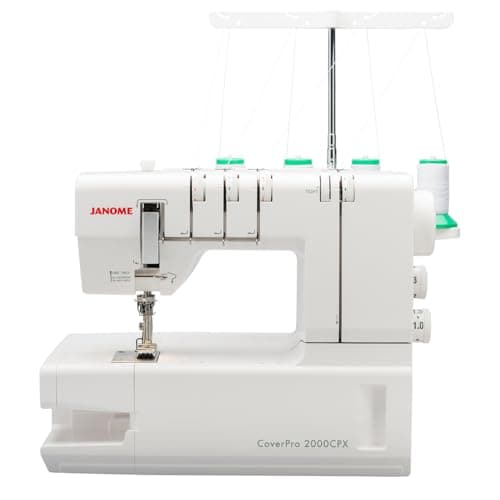
A standard serger also does not make the coverstitch hem seen on T-shirt hems, with two parallel rows on top and loops underneath. That needs a dedicated coverstitch machine, such as the Brother 2340CV, Janome CoverPro 1000CPX or Juki MCS-1500, or a combination machine that converts between serging and coverstitch. See serger vs coverstitch for the difference, and serger vs sewing machine for a full side-by-side.
Should you buy a serger?
A serger is most useful if you sew garments, especially from knits, or if you want the inside of your projects to look professional. Quilters and home decor sewists often get less use from one, although they are handy for finishing edges and making napkins and table linens.
Home sergers in our listings run from roughly $240 to $360 for basic 2/3/4 thread models like the SewLaVie 360, Singer S14-78, Brother 1034D and Janome 8002D, around $600 to $900 for models such as the Juki MO-654DE and Brother AIR1800, and over $1,000 for air-threading and automatic needle-threading models like the Juki MO-1000 and Brother Airflow 3000. Prices change often, so treat these as rough bands.
If you are not ready to buy, you can get close with a regular machine; see how to serge without a serger. When you are ready, how to use a serger for beginners walks through threading and first seams.
- You sew T-shirts, leggings, swimwear or activewear.
- You want finished, fray-free seams inside garments.
- You make lots of napkins, scarves or ruffles with rolled hems.
- You already have a sewing machine you are comfortable with.
Frequently asked questions
Is a serger the same as an overlocker? Yes. Serger is the usual US name and overlocker is the usual UK and international name for the same machine.
Do I need a serger to sew knits? No. A sewing machine with a stretch stitch or narrow zigzag and a ballpoint or stretch needle can sew knits. A serger makes the job faster and gives a stretchier, more professional seam.
Can a serger replace my sewing machine? No. It cannot do zippers, buttonholes or topstitching, and it always trims an edge. Most sewists use both machines together.
How many threads do I need on a serger? A 2/3/4 thread machine covers most home sewing. A 5-thread model adds a safety stitch used in some woven seams, and a coverstitch adds hemming stitches.