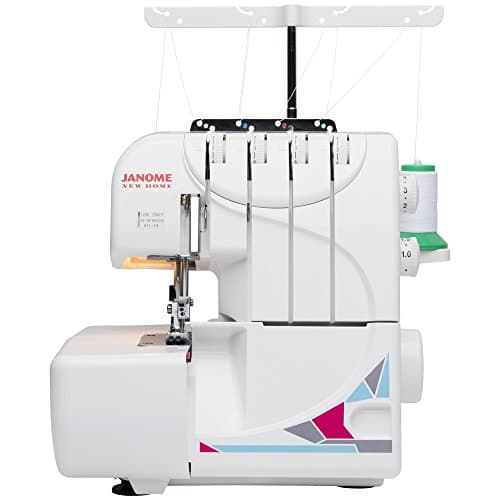
Comparison
Serger vs coverstitch machine
Published
Short answer
A serger (overlocker) trims the fabric edge, sews the seam and wraps thread around the raw edge in one pass. A coverstitch machine does not cut; it sews two or three parallel rows of straight stitches on top with a looper thread underneath, which makes the stretchy hems you see on T-shirts and leggings. Most sewists buy a serger first for seams, then add a coverstitch if they sew a lot of knits.
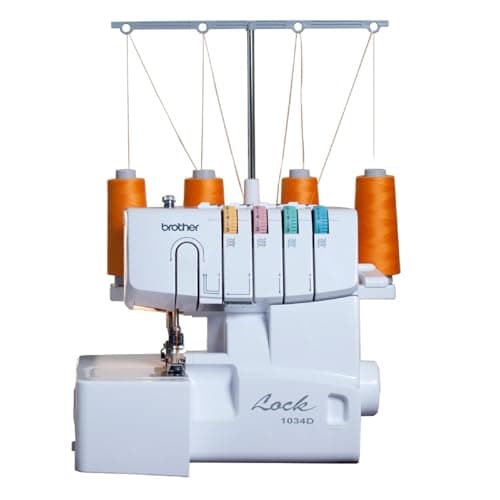
Brother
Brother 1034D, color-coded threading, metal frame
See price on Amazon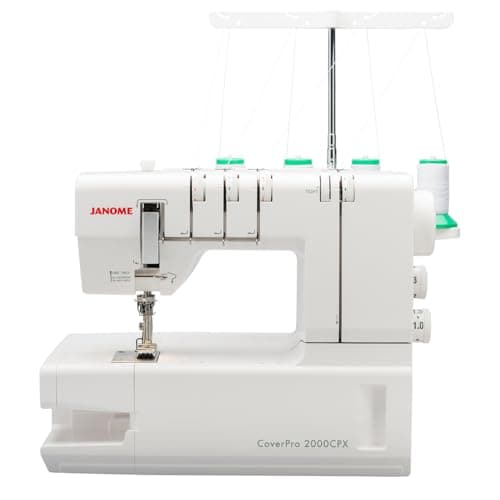
Janome
Janome CoverPro 2000CPX, 3 needles and free arm
See price on Amazon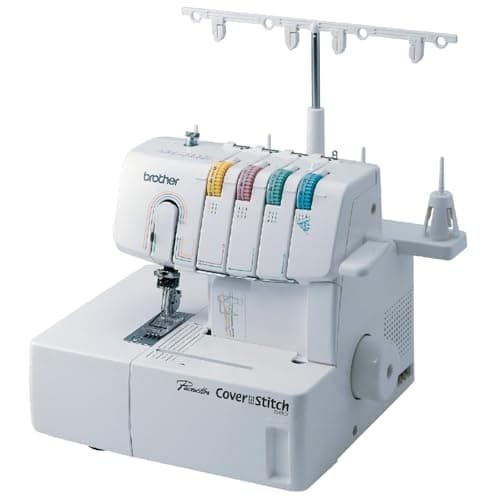
Brother
Brother 2340CV with metal frame, 3 to 6mm cover
See price on Amazon
- Brother 1034D, color-coded threading, metal frame
- Differential feed
- Not stated
- Machine type
- -
- Needles
- -
- Cover stitch width
- -
- Janome CoverPro 2000CPX, 3 needles and free arm
- Differential feed
- 0.5 to 2.25
- Machine type
- Dedicated coverstitch
- Needles
- 1, 2 or 3
- Cover stitch width
- 3mm or 6mm (two needle), 6mm (three)
- Brother 2340CV with metal frame, 3 to 6mm cover
- Differential feed
- 0.7 to 2.0
- Machine type
- Dedicated coverstitch
- Needles
- Not stated (tri-cover listed)
- Cover stitch width
- 3mm to 6mm
| Pick | Differential feed | Machine type | Needles | Cover stitch width | Price | Link |
|---|---|---|---|---|---|---|
| Brother 1034D, color-coded threading, metal frame | Not stated | - | - | - | - | Amazon |
| Janome CoverPro 2000CPX, 3 needles and free arm | 0.5 to 2.25 | Dedicated coverstitch | 1, 2 or 3 | 3mm or 6mm (two needle), 6mm (three) | - | Amazon |
| Brother 2340CV with metal frame, 3 to 6mm cover | 0.7 to 2.0 | Dedicated coverstitch | Not stated (tri-cover listed) | 3mm to 6mm | - | Amazon |
Facts are taken from each Amazon listing. Prices are checked daily and shown with their date.
Verdict
Buy a serger such as the Brother 1034D first if you want stronger, cleaner seams on any fabric. Add a coverstitch machine such as the Janome CoverPro 2000CPX or Brother 2340CV when knit hems are a regular part of your sewing.
Sergers and coverstitch machines look alike, use cones of thread and loopers, and both show up in knitwear. But they do different jobs. This page is for home sewists deciding which to buy, or whether a combination machine makes sense. We cover what each machine does, how the stitches differ, a side-by-side comparison of three representative machines from their listings, the trade-offs of combo machines, and what a regular sewing machine can do in place of either.
What a serger does
A serger uses one or two needles and two loopers to form an overlock stitch. A knife trims the seam allowance just ahead of the needles, so you get a sewn seam with a neatly wrapped raw edge in one pass. A 4 thread overlock is the standard seam for knits because it stretches with the fabric. A 3 thread overlock is lighter and good for finishing edges on wovens. Many sergers also do a rolled hem for napkins, scarves and ruffles.
Overlock is also called serging, and in the UK the machine is called an overlocker. Our what is a serger page explains the machine in more detail.
What a coverstitch machine does
A coverstitch machine has no knife. Two or three needles sew parallel straight rows on the top of the fabric, while a single looper underneath crosses between them. The top looks like a twin-needle hem and the underside shows a flat, stretchy mesh of looper thread. That stitch is used for hems on T-shirts, leggings and swimwear, for attaching neckbands and for decorative topstitching on knits.
Most coverstitch machines also sew a single-needle chain stitch, which is useful for basting and decorative work. Because nothing is trimmed, you can sew a coverstitch in the middle of a garment, not just at an edge.
Three representative machines compared
The table shows one serger, one dedicated coverstitch machine and one more coverstitch option, using only listing facts. It shows how the two machine types differ in practice.
Machine type
- Brother 1034D (serger)
- 3 or 4 thread serger
- Janome CoverPro 2000CPX
- Coverstitch machine
- Brother 2340CV
- Coverstitch-dedicated
Main stitches
- Brother 1034D (serger)
- 3 and 4 thread overlock
- Janome CoverPro 2000CPX
- 2 thread chain, 2 needle cover, 3 needle triple cover
- Brother 2340CV
- Tri-cover, wide and narrow cover stitch
Cover width
- Brother 1034D (serger)
- Not applicable
- Janome CoverPro 2000CPX
- 6 mm or 3 mm with two needles, 6 mm with three
- Brother 2340CV
- 3 mm to 6 mm
Top speed
- Brother 1034D (serger)
- 1,300 stitches per minute
- Janome CoverPro 2000CPX
- Up to 1,000 stitches per minute
- Brother 2340CV
- 1,100 stitches per minute
Differential feed
- Brother 1034D (serger)
- Not stated in listing
- Janome CoverPro 2000CPX
- 0.5 to 2.25
- Brother 2340CV
- 0.7 to 2.0
Other listed features
- Brother 1034D (serger)
- Metal frame, 3 snap-on feet
- Janome CoverPro 2000CPX
- Free arm, LED light, 4 x 5.5 in bed space
- Brother 2340CV
- Metal frame, lay-in threading, hem foot
| Feature | Brother 1034D (serger) | Janome CoverPro 2000CPX | Brother 2340CV |
|---|---|---|---|
| Machine type | 3 or 4 thread serger | Coverstitch machine | Coverstitch-dedicated |
| Main stitches | 3 and 4 thread overlock | 2 thread chain, 2 needle cover, 3 needle triple cover | Tri-cover, wide and narrow cover stitch |
| Cover width | Not applicable | 6 mm or 3 mm with two needles, 6 mm with three | 3 mm to 6 mm |
| Top speed | 1,300 stitches per minute | Up to 1,000 stitches per minute | 1,100 stitches per minute |
| Differential feed | Not stated in listing | 0.5 to 2.25 | 0.7 to 2.0 |
| Other listed features | Metal frame, 3 snap-on feet | Free arm, LED light, 4 x 5.5 in bed space | Metal frame, lay-in threading, hem foot |
Serger vs coverstitch: key differences
If you sew woven garments, quilts or home decor, a serger alone covers your edge finishing. If you sew mostly knits and are unhappy with twin-needle hems on your sewing machine, a coverstitch is the upgrade that makes the biggest visible difference.
- Cutting: a serger trims the edge with a knife; a coverstitch never cuts.
- Where it sews: a serger works at the edge; a coverstitch can sew anywhere on the fabric.
- Main job: a serger builds and finishes seams; a coverstitch hems and topstitches knits.
- Look: serger stitches wrap the edge; coverstitch shows straight rows on top and a looper mesh underneath.
- Threads: home sergers commonly use 2 to 4 threads; a coverstitch uses 2 to 4 threads depending on the stitch.
Combination machines and conversion time
Combination machines do both overlock and coverstitch in one body. Elna's eXtend Easy Cover and Covermax models are examples in our coverstitch machine guide. They save money and table space compared with buying two machines.
The trade is conversion. Switching from serging to coverstitch on a combo usually means disengaging or covering the knife, changing the needle setup and often the foot or plate, and rethreading the looper path. The steps vary by model, so read the manual before you buy. If you switch back and forth within one garment, that conversion adds up. Many sewists who hem knits every week prefer two separate machines so each stays threaded.
Note.Turn the machine off before changing needles, moving the knife or converting between modes. Serger knives are sharp.
Which to buy first
For serger picks see the best serger and best serger for beginners guides. For hems, our best coverstitch machine guide compares dedicated and combo models. A regular sewing machine can still sew knits with a stretch stitch and a twin needle; see how to serge without a serger and serger vs sewing machine.
- 1
List your projects for the next year. Count how many are knits that need hems.
- 2
If most are wovens, or a mix, buy a serger first.
- 3
If most are knit tops, leggings or activewear and your seams are already fine on a sewing machine, consider a coverstitch first.
- 4
If space or budget allows only one machine and you need both stitches, look at a combo and accept the conversion time.
Frequently asked questions
Can a serger do a coverstitch? A standard serger cannot. You need a dedicated coverstitch machine or a combination serger that converts to coverstitch.
Can a coverstitch machine finish seams? It can topstitch over a seam allowance but it does not trim or wrap the raw edge like a serger. Knit edges do not fray, which is why a coverstitch hem on knits works without serging first, though many sewists serge first for a cleaner look.
What is the difference between serger, overlock and coverstitch? Serger and overlocker are names for the same machine that sews an overlock stitch. A coverstitch is a separate stitch type made by a different machine.
Is a twin needle on a sewing machine the same as a coverstitch? It looks similar from the top, but the underside is a zigzag of bobbin thread rather than a looper mesh, and it usually stretches less.