Comparison
Single-needle vs multi-needle embroidery machines
Published
Short answer
A single-needle embroidery machine holds one thread color, so it stops at every color change and waits for you to rethread. A multi-needle machine holds several colors at once and switches between them automatically, usually with a tubular arm for caps and finished garments. Single-needle machines suit hobby and gift work; multi-needle machines pay off once you run repeat orders, caps or many-color designs for customers.
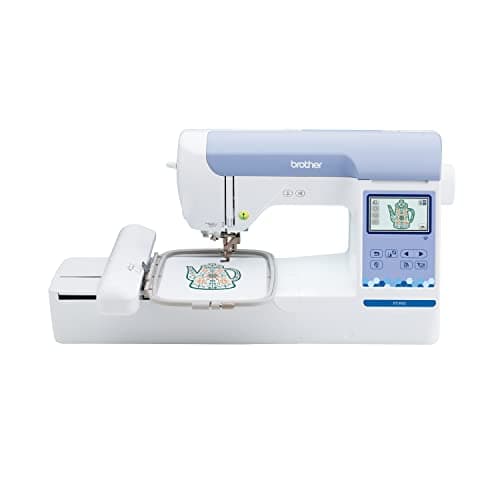
Brother
Brother PE900: 5x7 field, wireless, 193 designs
See price on Amazon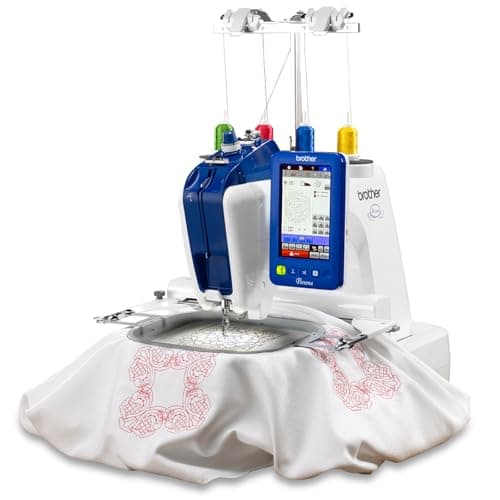
Brother
Brother Persona PRS100 free arm with cap frame
See price on Amazon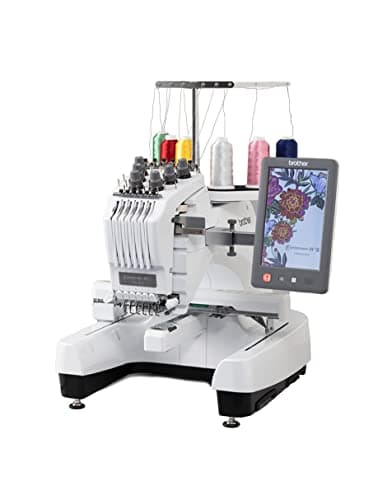
Brother
Brother PR680W: 6 needles, 30x20 cm, Wi-Fi
See price on Amazon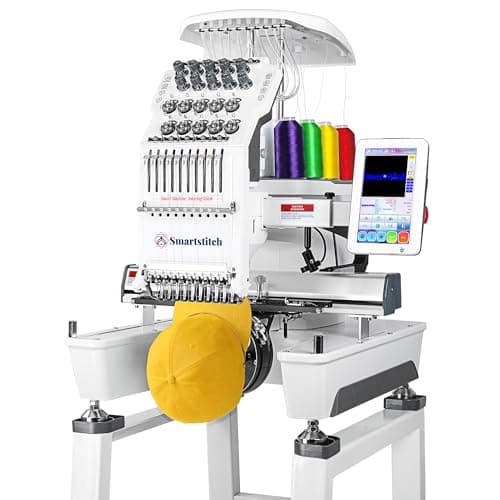
smartstitch
Smartstitch S-1001: 10 needles, compact, 1,200 spm
See price on Amazon
- Brother PE900: 5x7 field, wireless, 193 designs
- Screen
- 3.7 inch color LCD touchscreen
- Brother Persona PRS100 free arm with cap frame
- Screen
- Not stated
- Brother PR680W: 6 needles, 30x20 cm, Wi-Fi
- Screen
- 10.1 inch touchscreen
- Smartstitch S-1001: 10 needles, compact, 1,200 spm
- Screen
- 7 inch touchscreen
| Pick | Screen | Price | Link |
|---|---|---|---|
| Brother PE900: 5x7 field, wireless, 193 designs | 3.7 inch color LCD touchscreen | - | Amazon |
| Brother Persona PRS100 free arm with cap frame | Not stated | - | Amazon |
| Brother PR680W: 6 needles, 30x20 cm, Wi-Fi | 10.1 inch touchscreen | - | Amazon |
| Smartstitch S-1001: 10 needles, compact, 1,200 spm | 7 inch touchscreen | - | Amazon |
Facts are taken from each Amazon listing. Prices are checked daily and shown with their date.
Verdict
Buy a single-needle machine such as the Brother PE900 for hobby and gift embroidery, or the Brother PRS100 if you need caps on a single needle. Buy a multi-needle machine such as the Brother PR680W or Smartstitch S-1001 once you run regular customer orders, caps or many-color logos.
Most people start embroidery on a single-needle home machine, and many later wonder whether a multi-needle machine is the next step. This page is for hobbyists thinking about selling and for small shops weighing their first commercial-style machine. It explains how the two types differ in color changes, hooping, caps and speed, compares four machines from our guides using listing facts, and sets out practical signs that a single-needle machine is holding your work back.
The core difference: color changes
A design is stitched one color at a time. On a single-needle machine, the machine stops at the end of each color, and you cut the thread, rethread the next color and press start. A five-color logo means four stops where you must be at the machine. Features like color sort, which the Brother PE900 listing states, reduce the number of changes when you combine designs, but you still rethread for each one.
A multi-needle machine holds a spool on each needle. You thread all the colors once, the machine follows the design's color sequence, and it moves to the right needle by itself. The Smartstitch S-1001 listing states 10 needles with auto color changing and auto thread trimming; the Brother PR680W listing states 6 needles. You can walk away during a run, hoop the next garment, or run a second machine.
Four representative machines compared
The table compares two single-needle machines and two multi-needle machines from our guides. Listing silence is marked Not stated.
Needles
- Brother PE900
- 1
- Brother PRS100
- 1
- Brother PR680W
- 6
- Smartstitch S-1001
- 10
Maximum embroidery field
- Brother PE900
- 5 x 7 in
- Brother PRS100
- Not stated
- Brother PR680W
- 30 x 20 cm
- Smartstitch S-1001
- 9.5 x 14.2 in
Top speed
- Brother PE900
- Not stated
- Brother PRS100
- Not stated
- Brother PR680W
- 1,000 stitches per minute
- Smartstitch S-1001
- 1,200 stitches per minute
Cap embroidery
- Brother PE900
- Not stated
- Brother PRS100
- Cap frame and driver included
- Brother PR680W
- Not stated
- Smartstitch S-1001
- Caps listed as a use
Arm style
- Brother PE900
- Flatbed with 7.4 in needle-to-arm space
- Brother PRS100
- Tubular free arm
- Brother PR680W
- Not stated
- Smartstitch S-1001
- Not stated
Automatic color change
- Brother PE900
- No, single needle
- Brother PRS100
- No, single needle
- Brother PR680W
- Not stated
- Smartstitch S-1001
- Yes
Thread trimming
- Brother PE900
- Jump stitch trimming
- Brother PRS100
- Not stated
- Brother PR680W
- Not stated
- Smartstitch S-1001
- Auto thread trimming
Screen
- Brother PE900
- 3.7 in LCD
- Brother PRS100
- Not stated
- Brother PR680W
- 10.1 in touch screen
- Smartstitch S-1001
- 7 in touch screen
Design transfer
- Brother PE900
- Wireless LAN and USB
- Brother PRS100
- Not stated
- Brother PR680W
- Wi-Fi
- Smartstitch S-1001
- USB
| Feature | Brother PE900 | Brother PRS100 | Brother PR680W | Smartstitch S-1001 |
|---|---|---|---|---|
| Needles | 1 | 1 | 6 | 10 |
| Maximum embroidery field | 5 x 7 in | Not stated | 30 x 20 cm | 9.5 x 14.2 in |
| Top speed | Not stated | Not stated | 1,000 stitches per minute | 1,200 stitches per minute |
| Cap embroidery | Not stated | Cap frame and driver included | Not stated | Caps listed as a use |
| Arm style | Flatbed with 7.4 in needle-to-arm space | Tubular free arm | Not stated | Not stated |
| Automatic color change | No, single needle | No, single needle | Not stated | Yes |
| Thread trimming | Jump stitch trimming | Not stated | Not stated | Auto thread trimming |
| Screen | 3.7 in LCD | Not stated | 10.1 in touch screen | 7 in touch screen |
| Design transfer | Wireless LAN and USB | Not stated | Wi-Fi | USB |
Caps, sleeves and finished garments
A home single-needle machine has a flat bed, so the hoop must lie flat. That works for flat fabric and many shirts, but caps, sleeves and bags are hard to hoop. Multi-needle machines commonly use a tubular arm, so a cap frame or a small hoop slides around the arm and the garment hangs below it.
There are exceptions. The Brother PRS100 is a single-needle machine with a tubular free arm, and its listing includes a cap frame and driver plus small compact frames for socks and children's garments. It is a middle path for cap work without a multi-needle price. Our best embroidery machines for hats guide and how to hoop a hat cover cap work in detail.
Speed, field size and price
Multi-needle machines in our guides list higher speeds, with the PR680W at 1,000 and the S-1001 at 1,200 stitches per minute, and larger fields, such as 9.5 x 14.2 inches on the S-1001. But the real time saving is not stitching speed; it is removing the stops at each color change and letting you prepare the next hoop while one runs.
Price is the trade. Multi-needle machines cost several times more than home single-needle machines, take more space, and have a steeper learning curve on thread paths, tension and hooping. See how much an embroidery machine costs for the ranges at each level and our tension settings guide for multi-needle setup.
Note.Multi-needle machines are heavy and some ship on pallets. Check the listing's delivery and return terms and plan for at least two people to lift and place the machine on a sturdy stand.
When a single-needle machine holds a business back
A single-needle machine is fine for gifts, personal projects and a small side business with occasional orders. These signs suggest it is time to look at multi-needle:
- You turn down cap or bag orders because you cannot hoop them.
- You stand at the machine through every color change on repeat orders.
- Orders of a dozen or more matching items take most of a day.
- Customer designs keep exceeding your hoop field and need splitting.
- You need to price jobs for profit and your time per piece is too high. See how much to charge for machine embroidery.
Who should buy which
Choose a single-needle machine like the PE900 if you embroider for yourself, family and the occasional sale, and mostly stitch on flat items. Choose the PRS100 if you need caps and tubular items but want to stay single-needle.
Choose a multi-needle machine like the PR680W or S-1001 if you take regular customer orders, do caps and finished garments, or stitch multi-color logos in quantity. Compare commercial-style options in our best embroidery machines for a small business and home options in our beginner embroidery machine guide.
Frequently asked questions
Is a multi-needle machine harder to learn? It has more thread paths and tension settings to manage, and hooping on a tubular arm takes practice. Many owners start on a single-needle machine to learn stabilizer, hooping and designs first.
Can a single-needle machine embroider hats? Most flatbed home machines struggle with structured caps. A single-needle machine with a tubular arm and cap frame, like the Brother PRS100 from its listing, is built for it.
Do multi-needle machines use different design files? Many accept common commercial formats. The S-1001 listing names DST and DSB files; check each listing and manual for supported formats before you buy designs.
How many needles do I need? More needles means fewer manual rethreads on designs with many colors. For logos and lettering with a few colors, 6 to 10 needles covers most work; listings in our guides range from 4 to 15.
What you need for this
 See price on AmazonAmazon
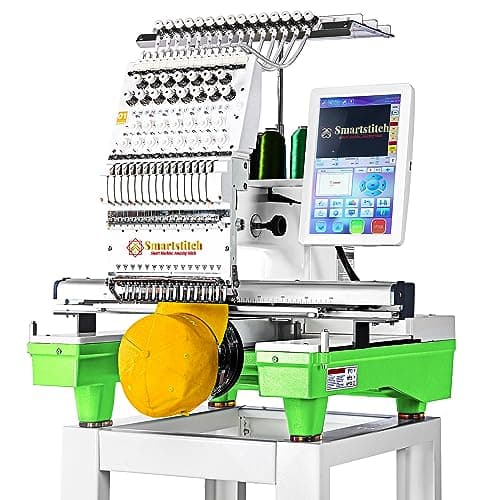
Smartstitch S-1501: 15 needles, 14x20 inch area
From Best multi-needle embroidery machines for a small business
 See price on AmazonAmazon
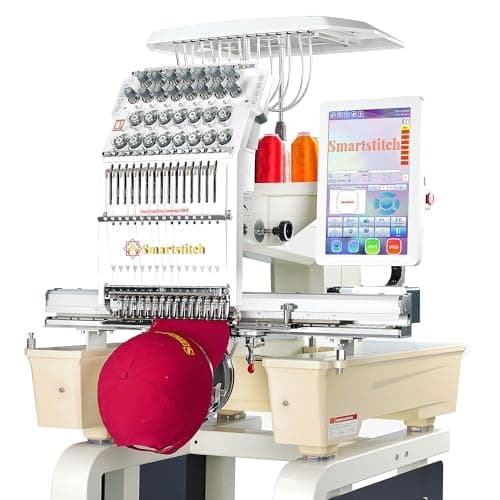
Smartstitch S-1501 Ultra, reinforced cap driver, 270 degree
- See price on AmazonAmazon
Brother PE900: 5x7 field, wireless, 193 designs
 See price on AmazonAmazon
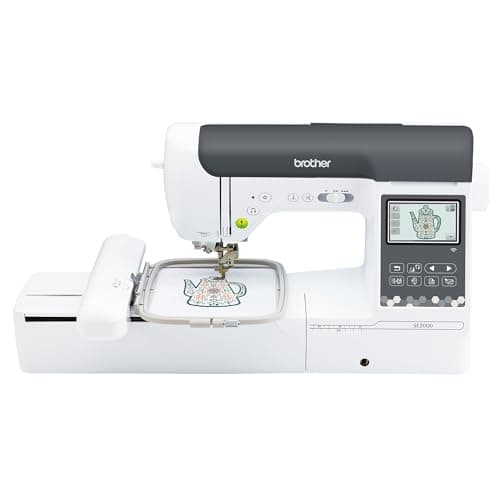
Brother SE2000, 5 x 7 in field with Wi-Fi
From Best Brother embroidery machines: PE, SE, Innov-is and PR compared