Explainer
Can a regular sewing machine do embroidery
Published
Short answer
Yes, a regular sewing machine can embroider in two ways: free-motion embroidery, where you lower the feed dogs and move hooped fabric by hand, and decorative built-in stitches. It cannot stitch digital designs from a file automatically. For that you need an embroidery machine or a sewing and embroidery combo with an embroidery unit that moves the hoop.
Machines for this job
All 8 picks compared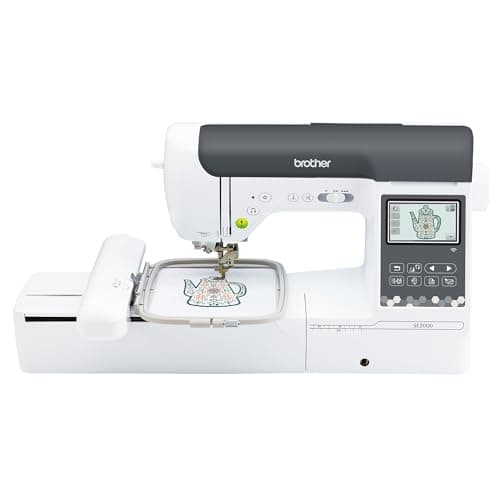
Brother SE2000, 5 x 7 in field with Wi-Fi
See price on AmazonSee it on Amazon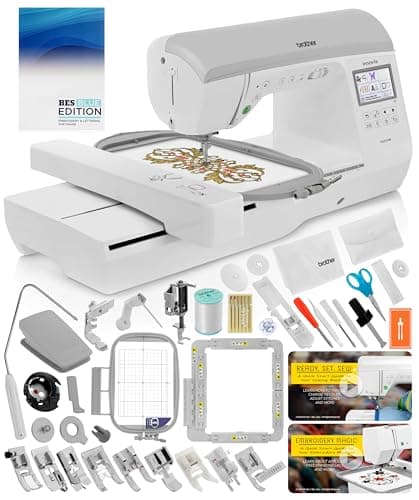
Brother NQ3550W bundle, 6 x 10 in field with BES Blue
See price on AmazonSee it on Amazon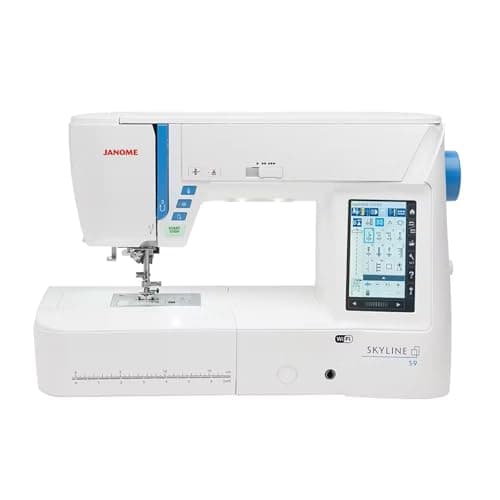
Janome Skyline S9, 5 in touchscreen and AcuFeed Flex
See price on AmazonSee it on Amazon
This page is for sewists who own a regular machine and want to add embroidery, whether that means monograms, appliqué or the logos and pictures sold as digital designs. It explains the difference between free-motion embroidery, decorative stitches and true hooped machine embroidery, shows how to try free-motion embroidery on the machine you already have, and covers what it takes to upgrade, including the price range of combination and embroidery-only machines in our listings.
Three kinds of embroidery on a machine
Free-motion embroidery uses a darning or free-motion foot with the feed dogs lowered or covered. You hold fabric in a hand embroidery hoop and move it under the needle to draw with thread. It is thread painting, and the result depends on your hand control.
Decorative stitches are the built-in patterns on many computerized machines, such as vines, scallops, satin stitch shapes and sometimes alphabets. The machine feeds the fabric normally and repeats the pattern in a line. They are good for borders and simple lettering.
Hooped machine embroidery is what most people mean by an embroidery machine. An embroidery unit moves a hoop in two directions under the needle while the machine stitches a digital design from memory or a file. It can reproduce logos, monograms and detailed pictures exactly, again and again.
Free-motion embroidery
- Regular machine?
- Yes, with a darning foot
- Good for
- Thread painting, freehand designs, quilting
Decorative stitches
- Regular machine?
- Yes, if built in
- Good for
- Borders, trims, simple lettering
Hooped design embroidery
- Regular machine?
- No, needs an embroidery unit
- Good for
- Logos, monograms, digital designs
| Method | Regular machine? | Good for |
|---|---|---|
| Free-motion embroidery | Yes, with a darning foot | Thread painting, freehand designs, quilting |
| Decorative stitches | Yes, if built in | Borders, trims, simple lettering |
| Hooped design embroidery | No, needs an embroidery unit | Logos, monograms, digital designs |
How to try free-motion embroidery on your machine
Most sewing machines that can lower or cover the feed dogs can do free-motion embroidery. Check your manual for a darning or free-motion foot and the drop-feed control.
- 1
Fit a darning or free-motion foot and lower or cover the feed dogs.
- 2
Back the fabric with a tear-away or cutaway stabilizer, or hoop it tightly in a wooden or spring hand hoop, upside down so the fabric sits flat on the bed.
- 3
Insert an embroidery needle, usually 75/11, and thread with embroidery thread on top and fine bobbin thread below.
- 4
Set a straight stitch; stitch length does not matter because you control it by how fast you move the hoop.
- 5
Sew at a steady, moderate speed and move the hoop smoothly. Practice lines, loops and fills on scrap before a real project.
Note.Keep fingers well clear of the needle when moving the hoop. The feed dogs are down, so the fabric will not move unless you move it.
Limits of embroidering on a regular machine
Free-motion work is slow and depends on practice. Matching a logo exactly or repeating a monogram on a dozen towels is very hard by hand. Decorative stitches only stitch in a line, and most machines have a limited number of fonts, if any.
A regular machine also cannot read embroidery files such as PES or DST. Those formats tell an embroidery unit where to move the hoop, and a regular machine has no unit to move. See embroidery machine file formats if you plan to buy designs.
Most regular machines cannot be upgraded with an embroidery unit later. Only models designed as embroidery-capable accept one, and many combo machines ship with the unit included. If you want hooped embroidery, plan on a new machine rather than an add-on.
What it takes to upgrade
You have two routes: a sewing and embroidery combo, which sews normally and accepts a detachable embroidery unit, or an embroidery-only machine, which you keep beside your sewing machine. Combos save space; separate machines let you sew while a design stitches.
In our current listings, the Brother SE700 combo with a 4 x 4 inch field runs about $580 to $680 depending on bundle, the SE1900 and SE2000 with 5 x 7 inch fields run about $1,170 to $1,700, and the Brother NQ3550W combo with a 6 x 10 inch field is about $3,000. Embroidery-only machines include the Brother PE545 at about $500 for 4 x 4 inch and the PE800 and PE900 at about $1,100 to $1,330 for 5 x 7 inch. See how much an embroidery machine costs for the full range.
Hoop size is the main thing to decide. A 4 x 4 inch field is fine for monograms and small motifs, while 5 x 7 inch covers most shirt and tote designs. Our hoop size chart and hoop size tool help match designs to fields.
Combo or separate machines?
A combo makes sense if space is tight, you embroider occasionally, or you are buying your first machine anyway. An embroidery-only machine makes sense if you already own a sewing machine you like and want to keep it free for sewing.
Either way, you will also need stabilizer, embroidery thread, bobbin thread and embroidery needles. Our checklist of what you need to start machine embroidery lists the essentials, and embroidery machine vs sewing machine compares the two in more detail.
Frequently asked questions
Can you embroider names with a regular sewing machine? Some computerized machines have built-in alphabets that stitch simple lettering in a line. For monograms in a hoop or many fonts, you need an embroidery machine.
Can I add an embroidery unit to my sewing machine? Only if your model was designed for one. Most regular machines have no connection for an embroidery unit.
What foot do I need for free-motion embroidery? A darning or free-motion foot, which hops up and down with the needle so you can move the fabric freely. Many machines include one or offer it as an accessory.
Is a combo machine good at both jobs? Combo machines sew and embroider well for home use. The trade-off is that you cannot sew while the machine is embroidering.