Explainer
Embroidery machine hoop size chart: names, stitch fields and machines
Published
Short answer
Home embroidery hoops are named by their approximate stitch field in inches. The common standard sizes are 4x4 (about 100 x 100 mm), 5x7 (about 130 x 180 mm), 6x10 (about 160 x 260 mm), 8x8 (about 200 x 200 mm) and 8x12 (about 200 x 300 mm). The usable field is what matters, and it varies by brand and model, so always check your machine's manual before buying a hoop or a design.
Machines for this job
All 8 picks compared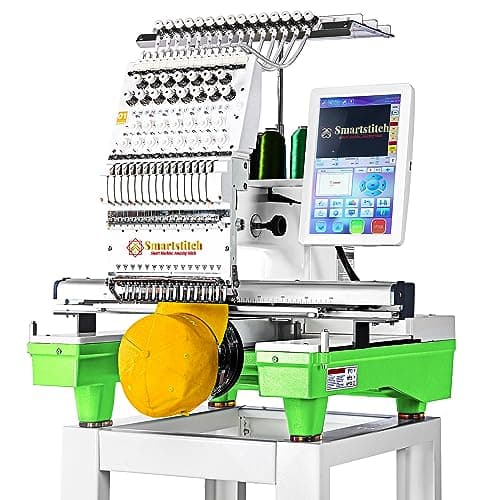
Smartstitch S-1501 15-needle, 14 x 20 inch field
See price on AmazonSee it on Amazon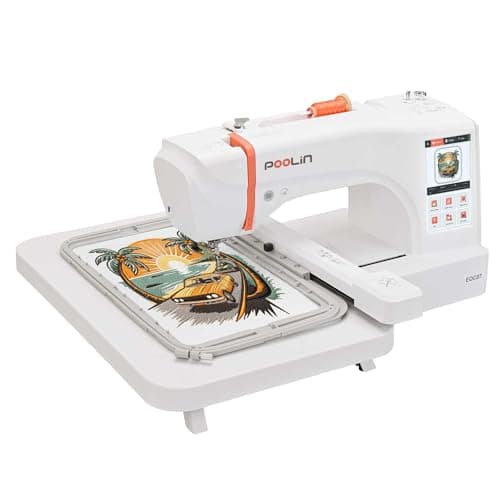
Poolin EOC07, 7.9 x 15 inch field
See price on AmazonSee it on Amazon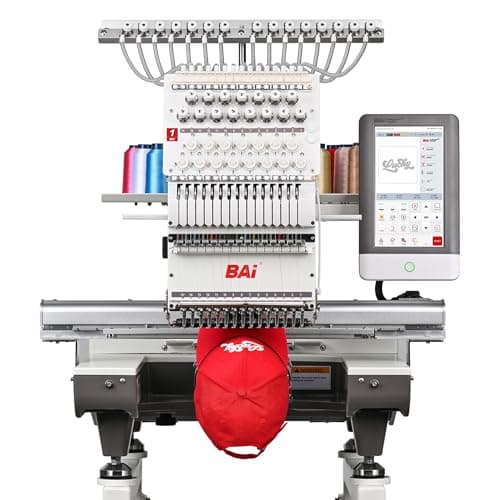
BAI Mirror 15-needle, 20 x 14 inch field
See price on AmazonSee it on Amazon
If you are shopping for an embroidery machine or buying designs online, hoop size is the first number you need to understand. Design sellers list files by hoop size, and machine makers list the largest field a machine can stitch. This chart lays out the standard home hoop sizes, what each name means in millimeters, which kinds of projects fit each one, and the common traps, such as confusing the outer hoop frame with the stitch field. Exact fields vary by brand and model, so treat these as the published standard sizes and confirm with your manual.
Standard embroidery hoop sizes at a glance
Most home embroidery hoops follow a handful of standard names. The name describes the approximate stitch field, which is the area the needle can actually reach, not the outside of the plastic frame. Designs are digitized to fit inside that field with a small margin.
The millimeter values below are the commonly published fields for each name. Some brands round differently or use slightly smaller fields for the same nominal size, so a design labeled 5x7 by one seller may be a few millimeters too big for another machine. When in doubt, compare the design's size in mm against the field listed in your manual.
4x4
- Approx. stitch field
- 100 x 100 mm
- Typical use
- Left-chest logos, small monograms, patches, baby items
5x7
- Approx. stitch field
- 130 x 180 mm
- Typical use
- Tote bags, towels, larger monograms, quilt blocks
6x10
- Approx. stitch field
- 160 x 260 mm
- Typical use
- Jacket backs on smaller garments, pillow fronts, larger quilt blocks
8x8
- Approx. stitch field
- 200 x 200 mm
- Typical use
- Square quilt blocks, wall hangings, large circular designs
8x12
- Approx. stitch field
- 200 x 300 mm
- Typical use
- Full jacket backs, large quilt blocks, big lettering
| Hoop name | Approx. stitch field | Typical use |
|---|---|---|
| 4x4 | 100 x 100 mm | Left-chest logos, small monograms, patches, baby items |
| 5x7 | 130 x 180 mm | Tote bags, towels, larger monograms, quilt blocks |
| 6x10 | 160 x 260 mm | Jacket backs on smaller garments, pillow fronts, larger quilt blocks |
| 8x8 | 200 x 200 mm | Square quilt blocks, wall hangings, large circular designs |
| 8x12 | 200 x 300 mm | Full jacket backs, large quilt blocks, big lettering |
Hoop name versus real stitch field
The biggest source of confusion is that the hoop name, the outer frame, and the stitch field are three different numbers. The outer frame is always larger than the field because the hoop needs room for the inner ring, the clamp and the attachment arm. The stitch field is the only number that decides whether a design will fit.
Design files also have their own size. A design sold as a 5x7 design usually measures a little under 130 x 180 mm so it fits inside the field with a margin. If you resize designs in software, keep an eye on the final size in millimeters, not the hoop label. Our embroidery hoop size guide takes a design's width and height and tells you the smallest common hoop that fits, including when rotating the design 90 degrees helps.
Note.A design that is even a millimeter too large for the field will usually be refused by the machine or flagged with a size message. Check the design size in mm before you hoop.
Which machines use which hoop sizes
Hoop capacity is one of the main ways embroidery machines are separated into price tiers. Entry machines usually top out at 4x4. Mid-range single-needle machines commonly offer 5x7. Larger home machines offer 6x10 or bigger, and some high-end single-needle and multi-needle machines go well beyond that. Exact fields vary by brand and model, so read the spec sheet for the field in millimeters.
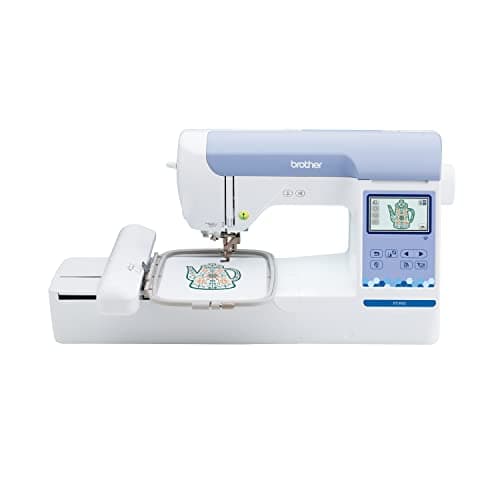
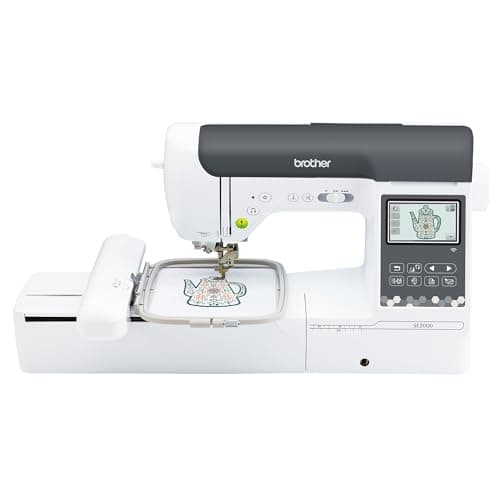
As examples from current listings: the Brother SE700 is sold with a 4x4 hoop, the Brother PE800, PE900, SE1900 and SE2000 are listed with a 5x7 field, and the Brother NQ1700E and NQ3550W are listed with a 6x10 field. Janome, Singer and other brands use their own hoop names and sizes, so do not assume a hoop from one brand fits another brand's machine.
Entry embroidery or combo
- Largest hoop (typical)
- 4x4
- Good for
- Learning, monograms, small gifts
Mid-range single-needle
- Largest hoop (typical)
- 5x7
- Good for
- Most home projects, towels, totes
Large-field single-needle
- Largest hoop (typical)
- 6x10 to 8x12 class
- Good for
- Quilt blocks, jacket backs, bigger designs
Multi-needle
- Largest hoop (typical)
- Varies widely by model
- Good for
- Production work, caps with a cap frame
| Machine class | Largest hoop (typical) | Good for |
|---|---|---|
| Entry embroidery or combo | 4x4 | Learning, monograms, small gifts |
| Mid-range single-needle | 5x7 | Most home projects, towels, totes |
| Large-field single-needle | 6x10 to 8x12 class | Quilt blocks, jacket backs, bigger designs |
| Multi-needle | Varies widely by model | Production work, caps with a cap frame |
How to choose the right hoop for a design
Use the smallest hoop that fits the design comfortably. A smaller hoop holds fabric tighter and closer to the stitching, which reduces shifting, puckering and outline gaps. A 2 inch design stitched in an 8x12 hoop leaves a lot of loose fabric in the middle, and that fabric can flex as the needle punches through it.
- 1
Check the design size in mm in your software or on the seller's listing.
- 2
Compare it to the stitch field of each hoop you own, allowing a few millimeters of margin.
- 3
Try rotating the design 90 degrees if it is long and narrow.
- 4
Choose the smallest hoop that fits, then hoop the fabric with the right stabilizer.
- 5
Use the machine's trace or outline function to confirm the design stays inside the field before you stitch.
When a design is bigger than your largest hoop
If a design does not fit, you have three options. You can resize it, split it into parts, or move up to a machine with a bigger field. Resizing in basic software by more than a modest amount can make stitches too dense or too sparse unless the software recalculates the stitch count, so keep changes small or use software that rebuilds the stitches.
Splitting a design means stitching it in sections and rehooping between them, lining up each section with registration marks. Some machines and software packages include tools for this, often sold as multi-position or split designs. It works, but alignment takes practice. If you regularly want designs larger than 5x7, a machine with a larger field is usually the simpler answer. See our guide to the best Brother embroidery machines for how hoop sizes step up across that range.
Hoop care and extra hoops worth having
Most machines ship with one or two hoops. Adding a smaller hoop than the one included is often the most useful upgrade, because many everyday projects are small. Magnetic hoops, sold for many popular machines, clamp thick or delicate items without the hoop burn that a tight screw hoop can leave, but they cost more and must match your machine's attachment.
Store hoops flat, keep the inner and outer rings together, and do not overtighten the screw while fabric is not in the hoop, since that can warp the frame over time. Pair this chart with our stabilizer chart and the list of starter supplies when you set up for your first projects.
Frequently asked questions
What is the most common embroidery hoop size? The 4x4 and 5x7 sizes are the most common on home machines. Many design shops offer the same design in both sizes because so many machines use them.
Can I use a bigger hoop than my machine supports? No. The embroidery arm can only move within the machine's maximum field, and hoops are built to attach to specific machines. A larger hoop from another model usually will not attach or will be rejected by the machine.
Is a 5x7 hoop exactly 5 by 7 inches? Not exactly. A 5x7 field is commonly about 130 x 180 mm, which is close to 5.1 x 7.1 inches. Fields vary by brand and model, so check the millimeter value in your manual.
Do hats need a special hoop? Caps on multi-needle machines usually use a cap frame. On single-needle machines, people often hoop stabilizer and attach the cap or use a cap hoop made for that model. Our guide to the best embroidery machines for hats covers the options.
What you need for this
- See price on AmazonAmazon
Smartstitch S-1501: 15 needles, 14x20 inch area
From Best embroidery machines with a large hoop, ranked by field size
 See price on AmazonAmazon
Brother PE900: 5x7 field, wireless, 193 designs
 See price on AmazonAmazon
Brother SE2000, 5 x 7 in field with Wi-Fi
From Best Brother embroidery machines: PE, SE, Innov-is and PR compared